Center for Ethics, Law, Policy and the Life Sciences (CELLS)
Berman Institute’s Debra Mathews Appointed President of the International Neuroethics Society
The Board of Directors of the International Neuroethics Society (INS) appointed Debra JH Mathews, Associate Director for Research and Programs at the Johns Hopkins Berman Institute of Bioethics and Professor in the Department of Genetic Medicine at Johns Hopkins University School of Medicine, to serve as president for a 2-year term beginning on October 25, 2023. The president serves as chair of the 15-member Board and guides efforts to achieve the mission of the Society to encourage and inspire research and dialogue on the responsible use of advances in brain science. Mathews has been an active member of the INS since 2006, a Board member since 2015, and is now the seventh president since its incorporation in 2008.
“I stepped forward for consideration for this role, not only out of a sense of duty to this organization that’s been such a critical part of my professional life literally from the beginning, and from which I’ve received so much, but also because I hope that I have something to offer,” said Mathews, who outlined several priorities she intends to champion during her presidency. Her focus includes:
- Undertaking important inward facing and outward facing work on inclusion, diversity, anti-racism and equity;
- Growing and supporting a pipeline of diverse junior scholars who want to grow from membership, to engaged involvement, and into leadership positions;
- Strengthening and creating robust connections between the INS and institutions and organizations representing allied fields and scholars.
“I’d like to see the field, and INS — having grown and matured over the last 15 years plus — reach out more, not only to neuroscientists, but also to other areas of science and technology, including genetics, stem cell science, AI, and other subspecialties within bioethics and beyond,” said Mathews. A video of her address is included as a chapter in the Business Meeting recording.
The International Neuroethics Society is a professional association of scientists, scholars, students, and practicing legal and health professionals leading the discussion on the complex ethical issues arising from brain research and an expanding understanding of the mind. Experts in the ethical, legal, and societal impacts of advances in neuroscience, Society members are uniquely equipped to communicate the value and implications that new knowledge, technologies, and potential applications bring to human health and wellbeing.
Prof. Kadija Ferryman Named to NAM AI in Health Care Steering Committee
The Berman Institute’s Kadija Ferryman has been named to the steering committee for a new National Academy of Medicine (NAM) initiative aiming to ensure the safe, ethical, reliable, & equitable use of Artificial Intelligence (AI) in health, medical care, and health research.
The Health Care Artificial Intelligence Code of Conduct (AICC) will define the roles and responsibilities of stakeholders throughout the AI lifecycle, covering aspects such as privacy, ethics, equity, accountability, and applicability and serve as a dynamic code subject to testing, validation, and improvement. The aim is to achieve broad adoption of the Code and a national health care AI architecture, with continuous improvement to fully realize the potential benefits of AI in the field.
The initiative, guided by a steering committee, composed of ethics and equity experts, care delivery systems, tech companies, patient advocates, researchers, and payers, responds to the need for standardized guidelines to promote governance interoperability, considering the significant impact AI can have.
Dr. Kadija Ferryman is an anthropologist who studies race, ethics, and policy in health technology. Specifically, her research examines how clinical racial correction/norming, algorithmic risk scoring, and disease prediction in genomics, digital medical records, and artificial intelligence technologies affect racial health inequities
The NAM AI Code of Conduct initiative will be developed with significant stakeholder and public input—an open process from the outset. NAM will organize informational gatherings and collaborative events and activities which will be used to inform the Code of Conduct. The goal is that the Code and national health care AI architecture be widely adopted, translated for implementation by various stakeholders, and continuously improved to realize AI’s enormous promise.
For more information on the project visit: https://nam.edu/programs/value-science-driven-health-care/health-care-artificial-intelligence-code-of-conduct
Neuroscience & Society
New “Bot Love” Podcast Explores Personal Relationships Humans are Developing with AI Chatbots
“Radiotopia Presents: Bot Love,” a new multi-part podcast series of true stories at the depths of how humans are developing meaningful relationships with artificial intelligence chatbots and what it means for the rest of us, launched Feb. 15 with the first of seven weekly episodes. The series is created by Diego Senior and Anna Oakes, with support from the iDeas Lab at the Johns Hopkins Berman Institute of Bioethics, and arose from the Institute’s 2020 Levi Symposium, “The Ethics of Virtual Humans.”
Recent major tech developments such as ChatGPT have thrust AI into the spotlight, but the world of artificial intelligence and the AI universe is bigger than the general public knows. Millions of users worldwide are in the midst of creating deep emotional bonds with their own AI-driven virtual humans. Bringing listeners into communities of people who create and form deep bonds with their AI companions, “Bot Love” traverses topics such as the nature of love, the fabric of human relationships, and the role that AI chatbots – and the private companies that provide them – might play in people’s mental health.
“AI technology has evolved so much in just the two years between the symposium and the creation of the podcast,” said Lauren Arora Hutchinson, director of the iDeas Lab. “Understanding how AI merges with people’s lived experiences is one of the most crucial challenges of our time. It is essential that we do not allow technological developments to outpace our capabilities for oversight.”
Stories throughout the series will feature a retired nurse from Tennessee who seeks refuge in an AI-driven chatbot app as a means after a series of difficult personal experiences, a woman who seeks romance with a bot following her spouse’s decline in health, an individual exploring their sexuality, an individual seeking mental health counseling options, and a teacher in the midwest who amidst solitude finds increasing amounts of solace through a fledgling relationship with a bot named Audrey, while spending less time in the outside world.
New episodes will be released each Wednesday through March 29 via “Radiotopia Presents,” and are available free on-demand across all major podcast platforms, including Apple Podcasts, Spotify, Amazon Music, Overcast, and PocketCasts.
The Dracopoulos-Bloomberg iDeas Lab launched last year as a cornerstone of the Berman Institute’s new program in public bioethics, aimed at serving as a model for academic institutions to more effectively share clear, accurate and timely information about issues in science, medicine, and public health.
“After two years of work, Diego and Anna’s release of ‘Bot Love’ couldn’t be more timely,” said Hutchinson. “I am very proud that this podcast is the first product to be completed in conjunction with the iDeas Lab and I am eager to share forthcoming work that will help the public better understand the societal implications of rapid advances in technology.”
Debra Mathews Appointed President-Elect of the International Neuroethics Society
Debra JH Mathews, PhD, MA, the Assistant Director for Science Programs for the Johns Hopkins Berman Institute of Bioethics, and an Associate Professor in the Department of Genetic Medicine at the JHU School of Medicine, has been appointed as President-elect of the International Neuroethics Society (INS). After one year in this role, Dr. Mathews will serve a two-year term as President, during which time she will work to expand connections between the INS and other professional societies, including those representing neuroscientists and researchers in other areas of science and bioethics.
“Even as disciplinary silos can be incredibly helpful for enabling specialization and depth, and for creating and building community, they can also cut us off from valuable information, ideas, methods, and relationships. I would like to see the field and the INS build connections to scientists and technologists and to social scientists asking similar questions in different academic spaces,” said Mathews. “Doing so will not only expand the universe of people who know about and might get involved with the INS, but will also help expand the thinking and enrich the scholarship of our members.”
Dr. Mathews is responsible for overseeing science and technology related programs in the Berman Institute. She also runs the Genomics and Society Mentorship Program and serves as the Chair of the Berman Institute’s Inclusion, Diversity, Anti-Racism, and Equity Committee. Within the Johns Hopkins Institute for Assured Autonomy (IAA), Dr. Mathews serves as the Ethics & Governance Lead. In this role, she leads work focused on the ethical, societal, and governance implications of autonomous systems, and identifies opportunities across IAA for the integration of ethics and governance work and priorities. She has been an active member of the INS since its inception in 2006 and has served on the Society’s Board of Directors since 2015.
Dr. Mathews’s academic work focuses on ethics and policy issues raised by emerging technologies, with particular focus on neuroscience, genetics, stem cell science, synthetic biology, and artificial intelligence. In addition to her academic work, Dr. Mathews has spent time at the Genetics and Public Policy Center, the US Department of Health and Human Services, the Presidential Commission for the Study of Bioethical Issues, and the National Academy of Medicine working in various capacities on science policy.
The International Neuroethics Society is a professional association of scientists, scholars, students, and practicing legal and health professionals leading the discussion on the complex ethical issues arising from brain research and an expanding understanding of the mind.
Robert H. Levi Symposium: The Ethics of Virtual Humans
Join the Berman Institute at ASBH 2021
The Berman Institute will be well represented at the 23rd annual meeting of the American Society for Bioethics and Humanities (ASBH), with a group of faculty, fellows, and students scheduled to present online.
View the full schedule and summaries of all Berman Institute presentations.
 |
You can also follow us on Twitter: #ASBH21, featuring our @bermaninstitute, @aregenberg, @kahnethx, @tnrethx, and more. |
Debra Mathews and Maria Merritt Elected Hastings Center Fellows
The Johns Hopkins Berman Institute of Bioethics is pleased to announce that two members of its faculty, Debra JH Mathews, PhD, and Maria Merritt, PhD, have been elected as Fellows by The Hastings Center.
Hastings Center Fellows are a group of more than 200 individuals of outstanding accomplishment whose work has informed scholarship and public understanding of complex ethical issues in health, health care, science, and technology. Their common distinguishing feature is uncommon insight and impact in areas of critical concern to the Center–how best to understand and manage the inevitable values questions, moral uncertainties, and societal effects that arise as a consequence of advances in the life sciences, the need to improve health and health care for people of all ages, and mitigation of human impact on the natural world.
Debra JH Mathews, PhD, MA, is well known for her scholarship and contributions to national and international thought and debates at the intersection of emerging biomedical technologies, ethics, and policy. Dr. Mathews is the assistant director for science programs for the Berman Institute, and an associate professor in the department of genetic medicine, Johns Hopkins School of Medicine. In addition to her academic work, Dr. Mathews has spent time at the Genetics and Public Policy Center, the U.S. Department of Health and Human Services, the Presidential Commission for the Study of Bioethical Issues under President Obama, and the National Academy of Medicine, working in various capacities on science policy. Dr. Mathews’s academic work focuses on ethics and policy issues raised by emerging biotechnologies, with particular focus on genetics, stem cell science, neuroscience, and synthetic biology. She currently serves as the chair of the Maryland Stem Cell Research Commission, is a member of the board of directors and executive committee of the International Neuroethics Society, and is an academic collaborator helping to shape and guide the work of the National Academy of Medicine’s new Committee on Emerging Science, Technology, and Innovation in health and medicine.
Maria Merritt, PhD, is an associate professor at the Berman Institute and Bloomberg School of Public Health in the Department of International Health (Health Systems Program). Dr. Merritt is a bioethicist whose home discipline is philosophy, specializing in moral philosophy. Her research focuses on two areas of inquiry: 1) delineating health researchers’ ethical responsibilities in relation to participants’ health needs in low resource settings and 2) representing social justice concerns in the economic evaluation of public health programs meant to benefit disadvantaged populations. Leading teams with expertise in health economics, social science, and infectious diseases, she has recently focused on developing an innovative formal methodology to assess social justice impacts in the economic evaluation of novel treatment regimens for multidrug-resistant tuberculosis, and of new technologies to diagnose and treat neglected tropical diseases. As the inaugural associate chair for student matters in the Bloomberg School’s Department of International Health (2016-2020), she received the School’s Student Assembly Special Recognition Award for Outstanding Commitment to Student Success. Dr. Merritt is an alumna of the Greenwall Faculty Scholars program and is affiliated with the National Institutes of Health as a 2000-2002 postdoctoral Fellow and a 2020-2021 visiting scholar.
Mathews and Merritt join a half-dozen of their Berman Institute faculty colleagues as Hastings Center Fellows. They are:
- Joseph Carrese
- Ruth Faden
- Gail Geller
- Jeffrey Kahn
- Nancy Kass
- Cynda Hylton Rushton
Recapping the Berman Institute at ASBH 2020
The Berman Institute will be well represented at the 22nd annual meeting of the American Society for Bioethics and Humanities (ASBH), with a group of faculty, fellows, and students scheduled to present online.
View the full schedule and summaries of all Berman Institute presentations.
|
You can also follow us on Twitter: #ASBH19, featuring our @bermaninstitute, @aregenberg, @kahnethx, @tnrethx, @DiStefano_MJ, and more. |
Special Events

Plenary: Social Justice and Bioethics through the Lens of the Story of Henrietta Lacks
October 15, 2020
1:15-2:30 p.m.
Join Jeff Kahn, Ruth Faden, Jeri Lacks (granddaughter of Henrietta Lacks), and Patricia King for a panel discussion examining social justice and bioethics through the lens of issues and challenges raised by the story of Henrietta Lacks and the HeLa cell line derived from her cells.
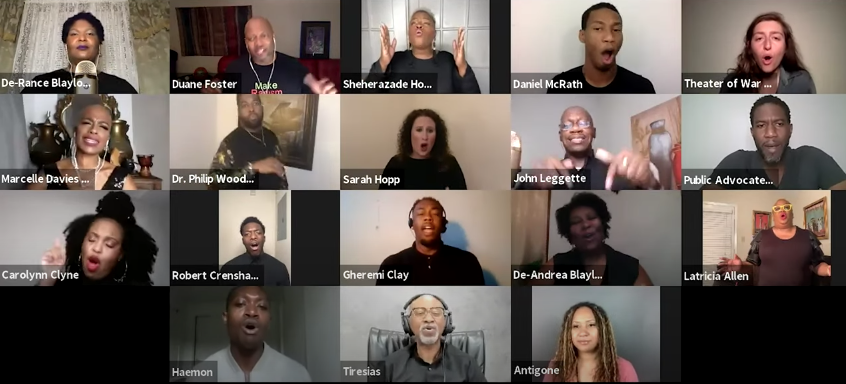
Antigone in Ferguson: Free Online Zoom Performance
October 17, 2020
6- 8:30 p.m.
A groundbreaking project that fuses dramatic readings by acclaimed actors of Sophocles’ Antigone with live choral music culminating in a powerful, healing discussion that will foreground the perspectives of people in Baltimore whose lives have been impacted by racialized police violence and health inequity
Jeffrey Kahn to Serve on New National Academy of Medicine Committee
Jeffrey P. Kahn, Andreas. C. Dracopoulos Director of the Berman Institute of Bioethics has been selected to serve on the National Academy of Medicine’s newly established Committee on Emerging Science, Technology, and Innovation in health and medicine(CESTI). The committee will assess the landscape of emerging scientific advances and technologies in health and medicine and address the potential societal, ethical, legal, and workforce implications of such technologies, with the goal of developing a multi-sectoral governance framework. In addition, Debra Mathews, the Institute’s Assistant Director for Science Programs, has been selected as an Academic Collaborator for CESTI.
Advances in biomedical science, data science, engineering, and technology are leading to high-pace innovation with tremendous potential to transform health and medicine. Recent examples include artificial intelligence in health care, human genome editing technologies, and new neural technologies, such as brain implants. At the same time, these breakthroughs carry risks and have important implications for society, with particular concerns related to the speed of adoption, the ability to control cost of care, and the potential to exacerbate inequities and challenge social norms and ethics.
CESTI is comprised of individuals representing perspectives from health, biomedical science, ethics, social sciences, law, regulation, and other disciplines. A complete committee roster is available here.
The committee will hold meetings and public workshops to:
- monitor, anticipate and identify emerging developments with significant potential to transform health and medicine;
- address specific cases through collective review and study;
- assess the multitude of factors and their interactions that shape the translation of emerging technologies;
- analyze and delineate the potential risks and societal implications posed by these technologies;
- build shared understanding around terminology relating to the governance and the means by which different domains work together; and
- develop a framework of multi sectoral governance to guide the future development of emerging technology for the collective good.