After losing their son Noah to mitochondrial disease, Kristelle and Evan Shulman are determined that his death will not be in vain, holding fast to their dream of having healthy, biologically-related children. This search leads them abroad in pursuit of an emerging reproductive technology, one filled with scientific promise, but also ethical questions, financial strain, and profound uncertainty. This episode explores how families and physicians make decisions when novel approaches can reduce risk, but never eliminate it. (Part 2 of 2. Listen to Part 1, “Losing Noah.”)
- Johns Hopkins Berman Institute of Bioethics
- Research & Outreach
- The Dracopoulos-Bloomberg iDeas Lab
- Projects
- playing god? A bioethics podcast
- playing god? Season Two
- Episode 4: How Far Would You Go to Have a Healthy Baby? (Part 2)
Episode 4: How Far Would You Go to Have a Healthy Baby? (Part 2)


Featuring
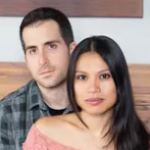
Kristelle and Evan Shulman
Parents navigating mitochondrial disease and reproductive decision-making
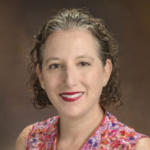
Marni Falk, MD
Attending physician and Executive Director of the Mitochondrial Medicine Frontier Program
Children’s Hospital of Philadelphia
Professor in the Division of Human Genetics, Department of Pediatrics
University of Pennsylvania Perelman School of Medicine
Episode Transcript
Evan Shulman
There’s no guarantees ever with life or with having a child. There’s a lot of assumptions that, you know, you’re going to have a kid and they’re going to be healthy, but there’s a lot that needs to go right for that to happen. And it doesn’t always work out like that.
Lauren Arora Hutchinson
In the last episode of playing god?, we heard Kristelle and Evan Shulman’s story, how they tragically lost their son, Noah, to a fatal genetic disorder called mitochondrial disease.
Kristelle Shulman
I need you to rest now. I don’t want you to suffer anymore. No one should ever go through this.
Lauren Arora Hutchinson
Mitochondria are energy-producing structures inside our cells that carry their own DNA, which is passed down only through the maternal line. That means Noah inherited the disease from Kristelle. So, when the Shulmans learned about Noah’s diagnosis, they also learned that Kristelle carries the same genetic mutation in some of her own mitochondria. Noah’s mutation load was a hundred percent, meaning all of his mitochondrial DNA carried the mutation. Kristelle’s, they discovered, is around 70%. Doctors warned them that if they tried to have another biologically related child, the risk of the disease being passed on would simply be too high.
Evan Shulman
You guys cannot have healthy biologic children.
Lauren Arora Hutchinson
But after Noah’s death, instead of stepping back as might be expected, they found themselves moving forward. They wanted something different, not just for their family, but for others facing the same risk and uncertainty.
Kristelle Shulman
After he passed, I think we vowed that we need to help others, you know?
Evan Shulman
Something good has to come out of this, like Noah, Noah has to have, like, his mark on the world, beyond, you know, making all these friends in the ICU, and he has to have a mark on the world.
Lauren Arora Hutchinson
That search led them towards a new and controversial reproductive technology, one that could maybe, just maybe, help them have a healthy biologically related child, but along the way they would encounter unexpected complications, shifting possibilities, and ultimately a different path to growing their family than one they had imagined.
Kristelle Shulman
I’m getting goosebumps talking about it.
Lauren Arora Hutchinson
This is part two of the Shulman’s story, a story about how far one family would go to have a healthy, biologically related child. About how much risk and uncertainty they were willing to accept and what ethical boundaries they were willing to test. I’m Lauren Arora Hutchinson, Director of the iDeas Lab at the Johns Hopkins Berman Institute of Bioethics, and this is playing god? Around the same time that Kristelle and Evan lost Noah, federal legislators in the US were taking a position on what’s called mitochondrial replacement technology, or MRT. This novel reproductive technology takes the nucleus from the egg of a woman with mitochondrial disease and transfers it into a donor egg with healthy mitochondria, whose own nucleus has been removed. That reconstructed egg is then fertilized through IVF. To the Shulmans, this sounded like the answer they were looking for.
Evan Shulman
We’re like we have to figure out a way to do MRT.
Lauren Arora Hutchinson
The nucleus of a cell contains the vast majority of the DNA we inherit from our parents, the genetic code that shapes who we are. So while the resulting embryo would be the biological child of the mother and father, it would also carry some genetic material from the third person, the egg donor, for its mitochondrial DNA. That’s the whole point. The problem is that this genetic change could be passed down to future generations. In 2016, Congress effectively blocked the US Food and Drug Administration from even considering whether to license the use of the technology because of those concerns. Still, some experimental research on MRT continued. About a year later, hoping the results might soon change, Kristelle and Evan took a leap of faith.
Evan Shulman
We enrolled in an MRT trial in the US that did not have approval to implant embryos, but they had approval to create embryos. So, she underwent an IVF cycle, harvested eggs with the intention of creating an embryo. They were looking for what’s called a haplotype match, which essentially was somebody from a similar genetic background, so potentially from similar ancestral roots.
Lauren Arora Hutchinson
You can think of a haplotype as a kind of genetic zip code, a pattern in mitochondrial DNA that traces maternal ancestry. Kristelle is originally from the Philippines, so the hope of the researchers was that an egg donor with a similar background might help give an embryo a better chance of success.
Evan Shulman
We were just waiting for quite some time.
Lauren Arora Hutchinson
And while they waited, the Shulmans kept learning about MRT and about its risks.
Evan Shulman
You know, I went to talks from researchers who have done a lot of research on MRT. I read every paper that would come out on it, and reading all these opinions, and we started to hear more about concerns about the long-term outcomes of MRT.
Lauren Arora Hutchinson
Chief among them is that when you extract the nucleus from the mother’s egg cell to put into the healthy donor egg…
Jeffrey Kahn
It’s impossible to take all of the nucleus and not carry some of the cytoplasm, and the cytoplasm is where the disease-causing mitochondria are, and so you’re bringing over some disease-causing mitochondria when you, you do that movement.
Lauren Arora Hutchinson
Our resident bioethicist and director of the Johns Hopkins Berman Institute of Bioethics, Jeffrey Kahn.
Jeffrey Kahn
Now, of course, you’re, you’re vastly reducing the number, but because of the way mitochondrial biology works, those disease-causing mitochondria will multiply up in the new environment, and the question is, how much is enough to pose, I guess, real risk of mitochondrial DNA disease, even after MRT?
Lauren Arora Hutchinson
In the end, Kristelle and Evan were unable to find a donor egg that was a close enough haplotype match, so they didn’t move forward in the MRT research study, but these questions about risk and uncertainty were quickly reignited as they pushed forward to explore other options.
Kristelle Shulman
We did consult with other mitochondrial disease specialists, and then, of course, finally we met with Dr. Falk.
Marni Falk
I met Kristelle and Evan when they were trying to figure out whether they could have a healthy baby.
Lauren Arora Hutchinson
Dr. Marni Falk, director of the Mitochondrial Medicine Frontier Program at the Children’s Hospital of Philadelphia.
Marni Falk
And, it was a very difficult conversation, but it was clear that they were very motivated and wanted to do everything they could to have a biologically related child, and that’s, that’s how we got to know each other.
Lauren Arora Hutchinson
Central to their conversation was a puzzling question: why Kristelle, who carries the genetic mutation in more than 70% of her mitochondrial DNA, had never shown any symptoms…
Kristelle Shulman
When Dr. Falk said, “you know, you’re so active, you’re constantly working out.” And so, she says that this is probably what is helping you. You know, you’re compensating.
Lauren Arora Hutchinson
And they begin looking more closely at her extended family.
Kristelle Shulman
You know, like my family had no idea, like I was the third of four children, so and on my mom’s side, they had eight, you know, it’s like a big family, so they had no idea.
Lauren Arora Hutchinson
Had anyone else been affected by the disease, like Noah?
Kristelle Shulman
So one of my aunts, yeah. So, she had a girl, and I think 18 months, like, she passed. So I’m from the Philippines, and back then in probably like late 70s-80s, healthcare is not the same as in the US. They diagnosed her with pneumonia. You know, there was no test, diagnostic testings, in terms of, you know, genetic stuff, so it’s… it was unknown. So that was the only one, I guess, young cousin that I had who passed, but other than that, like we had… you know, everyone’s relatively healthy.
Lauren Arora Hutchinson
Maybe, they thought, this was a reason for hope.
Evan Shulman
We suggested that everybody in the family get tested, and it turns out that there was quite a wide range of mutation load in them. So, anywhere from 28 percent to Kristelle being the highest of 70 something percent. So, then we took a step back and we said, well, if Kristelle’s mother was able to produce children with a wide spread of heteroplasmy, then maybe Kristelle has eggs with the same wide spread.
Lauren Arora Hutchinson
The realization changed their options. If some of Kristelle’s eggs carried lower levels of the mutation, maybe they could have a healthy child, without needing to do MRT. They reached back out to Newcastle University, a pioneer of new techniques to address mitochondrial disease.
Evan Shulman
We gave them all the results that we got here, and they said, “Okay, we’re going to present it at our multidisciplinary conference, and we’ll get back to you.” And then, within a week or two, they got back to us, and they said, “we think you’d be excellent candidates for genetic diagnostic testing of our own embryos.”
Lauren Arora Hutchinson
This approach would be a cutting-edge new version of what’s called pre-implantation genetic testing, or PGT.
Marni Falk
PGT is a very standard used every day all across the United States of America in the setting of in vitro fertilization.
Lauren Arora Hutchinson
Dr. Marni Falk, again.
Marni Falk
When you have an embryo and you take a sample on day five for most nuclear genes, and you ask the question, is the mutation that’s known to run in this family present in this embryo. That’s preimplantation genetic testing, and that’s being used for any nuclear gene disorder. What hasn’t been available until recently is preimplantation genetic testing for errors in the mitochondrial DNA.
Lauren Arora Hutchinson
The Shulmans decided to become pioneers of this new approach. It’s an extremely delicate process.
Marni Falk
You have to be really precise to know that the result you’re giving doesn’t just find the mutation, but tells you the percentage of that mutation in that cell, and then the other question that people weren’t certain of is, how likely is that level that you find on day three after an embryo has been created relate to trillions of cells dividing over time by the time that baby’s born to know what the level would be in their organs, their brain, their heart, their kidney, or their blood. Could it become 30% or 50% or 80% in certain organs of the actual baby? Those answers still aren’t known.
Lauren Arora Hutchinson
The uncertainty remained profound, but the Shulmans remained certain they wanted to push ahead. They began planning to go to Newcastle for tests, which was the only place in the world where PGT for mitochondrial DNA was available.
Evan Shulman
It was a lot of work. We had to spend about a year and a half doing a lot of legwork here. Kristelle underwent another IVF cycle. There was a lot of red tape, a lot of barriers, a lot of lab work back and forth, and at the time they were not comfortable receiving genetic material from here, and just essentially just shipping it over there. They wanted us present with our eggs or embryos, and they wanted to do the embryo transfer in real time with Kristelle there.
Kristelle Shulman
We also found, like, I mean, on top of those barriers I think financially too was a big one, so luckily, like I wasn’t, you know, a nurse practitioner at Mount Sinai, and it was unionized. So, the IVF, the fertility, was covered, but it, you know, of course, it wasn’t enough, so there was some things that we had to, you know, we had savings, so it’s, it’s a lot too financially.
Lauren Arora Hutchinson
After 18 months of preparation, Kristelle and Evan were finally ready to fly to Newcastle.
Evan Shulman
The first time we actually treated it like a vacation, we had a whole itinerary planned out. I mean, we, we love to travel together. We had embryos created here in the US, they were frozen on day one of development, and those embryos were taken, hand delivered by courrier to the UK, and we met them there, and the team at Newcastle, who we had been speaking with for a year and a half, was, of course, great. They were so welcoming and warm and positive.
Lauren Arora Hutchinson
The embryos were thawed, allowed to grow, and then tested.
Evan Shulman
And then I would say, I think it was like the next day, I forget where we were. I think we were at a beach or something. We were, we were walking around, and we got a call from the embryologist with our results, and we were like ecstatic. She told us we had one embryo that was as low as 10% mutation load, and on the flip side, we had several that were like 98-99% which essentially is basically what Noah had, and again it was one of those like bittersweet moments where we’re like, wow, like hearing 10% we know there’s a chance for a healthy child in there, and also hearing 99 is scary, because if we just blindly went into this again and had children again, it could have landed on that, and we’d be in the exact same place again.
Lauren Arora Hutchinson
With high hopes, they tried implanting the embryo with that 10% mutation load, but unfortunately, as often happens with IVF, it didn’t lead to a pregnancy. Once again, they were left asking themselves, what level of risk is low enough?
Jeffrey Kahn
What’s the threshold? That’s the question that the Shulmans and others at the sort of early stage of these kinds of technologies have to wrestle with.
Lauren Arora Hutchinson
Jeffrey Kahn, again.
Jeffrey Kahn
And so, you have to be comfortable with this level of risk and uncertainty, and decide whether or not to go forward. You know, put yourself in a position like that… what would you do? They weren’t being offered the option to make the risk go away altogether, and so they had to decide how comfortable they would be with some level of risk.
Lauren Arora Hutchinson
That was a decision only the Shulmans could make.
Evan Shulman
In Newcastle, they said they were comfortable in the 35 to 40% range, and they even said, honestly, 50% is probably okay.
Kristelle Shulman
And I think it’s also because they saw that I had 70 to 80% and that I was able to pretty much live a normal life, thank God. So it was definitely individualized.
Evan Shulman
As far as like what level of risk to accept, we kind of started thinking like there’s no, there’s no guarantee every pregnancy is a risk, and if, if you had cancer that ran in the family, would you not have a child, or if you had heart disease running in the family, would you not have a child? If you knew that there was a reasonable chance that they could avoid it later on? And that was kind of the approach that we took. We tried to take a step back, and while mitochondrial disease is very serious, most often it’s not, it’s not terminal with a low threshold, you can live a perfectly healthy life.
Kristelle Shulman
Or even a high threshold,
Evan Shulman
or even a high threshold. Yeah, yeah.
Kristelle Shulman
So it’s, yeah.
Lauren Arora Hutchinson
Over the next four years, they went through multiple rounds of IVF, six embryo transfers, and three trips across the Atlantic. There were setbacks, failed implantations, and early pregnancy losses. It was exhausting and heartbreaking at times. They weren’t sure they could keep going.
Kristelle Shulman
Oh my goodness, we just didn’t think it was possible, but we were still hopeful. We wanted to keep going, I wasn’t going to stop, and I think it’s also Noah pushing me to it, because I knew once I held him, I knew once I had him, like… it’s just something that I don’t want to miss out on.
Lauren Arora Hutchinson
But then, in late 2020, using an embryo with a low enough mutation load, Kristelle finally got pregnant.
Kristelle Shulman
I remember looking at the pregnancy, you know, stick, and we’re like, what, like, like, you know, we just… it was surreal. It was almost like, this can’t be real, this is, this is impossible, and you know I’m getting goosebumps talking about it.
Evan Shulman
There was jumping involved, I think.
Kristelle Shulman
Lots of jumping and screaming and…
Evan Shulman
Kristelle and I both still remember our expressions.
Kristelle Shulman
So throughout the pregnancy, you know, of course, we were worried.
Evan Shulman
But, she had a completely normal pregnancy for nine months, and then 2021, Nora was born.
Kristelle Shulman
Delivering Nora was not without complications, and I said, ‘Oh my god, Nora, you came into this world like loud, like just you just made sure that you are here, like, and she’s still like that. She’s just Nora. I can’t describe her. Can you describe her, right? She’s… Evan said that she’s a tank, and that’s true. She is a tank.
Lauren Arora Hutchinson
Nora was one of the first babies born in the US to have been screened for mitochondrial disease risk using PGT, and most importantly…
Kristelle Shulman
You know, she’s healthy. Thank God, she’s so healthy, and I hope she can… I pray that she continues to be healthy. So it was, it was nice, it was a good feeling, just knowing that it worked, you know?
Lauren Arora Hutchinson
After Nora was born, doctors measured her mutation level again.
Evan Shulman
Her heteroplasmy matched exactly what they predicted when she was an embryo. She goes once a year to see Dr. Falk and make sure that she stays on track with everything, but she was always ahead of the curve with her growth, with speaking, with all her milestones, and now next year she’s going to be starting kindergarten. She’s turning five this summer already, and yeah, she makes us very happy. And then last year we added to that with our second baby girl, Hannah, who was born November 2024, and she’s now walking and babbling and also hitting all her milestones.
Marni Falk
When you hear the voice you know of the laughing child who’s been born from this and you hear the stories of the families… we are all very much indebted to the Shulmans, because they really did have to go through an awful lot. Many, many cycles, many, many trips, many, many conversations, a lot of stress, a lot of hope, a lot of failure, and they’re, they’re on the side now of having two healthy children.
Jeffrey Kahn
The people who are first are… I think it’s always right to talk about them in some, some sense as a pioneer, so they’re, they’re breaking new ground here. And, and it’s so novel that, that it’s hard to say well, we know from experience that because there isn’t any experience yet. The Shulmans were really at the forefront of this. At some point that technology will be shared and developed, and it will be more available in more parts of the world. So, it’s pioneering on the part of the Shulmans, it’s pioneering on the part of the laboratories, pioneering on the part of the physicians who are helping, but that’s how that’s how medicine advances.
Lauren Arora Hutchinson
Since the Shulmans’ early conversations with Newcastle, the science has continued to evolve. The technique they used, mitochondrial PGT, which allows the lab to screen embryos for mitochondrial disease before pregnancy, is still only offered in a few places in the world. The approach that the Shulman’s first considered, mitochondrial replacement technology or MRT, aims to prevent disease by replacing faulty mitochondria in the egg itself, prior to fertilization. MRT still isn’t permitted in the United States and is tightly regulated in the few places it is allowed. But in 2025, doctors in the UK reported what many are calling a medical breakthrough: the births of at least eight babies using MRT. So far, all appear to be healthy.
Archive
A groundbreaking IVF technique involving three people has resulted in the births of eight babies free from what can be devastating diseases. Scientists in Newcastle have pioneered the technique to stop mothers passing down a mutation in their DNA that can cause mitochondrial disease, which commonly impacts major organs, such as the heart and the brain.
Evan Shulman
The beginning of our mission was to help other families and hopefully prevent other people from going through this, and we’ve had a number of families reach out to us, and one family reached out to us, who we, we ultimately ended up getting them in the hands of Newcastle, and they had a son who was born about a year after Nora. They named him Noah, which is pretty touching for us to hear, and they actually brought him to our daughter’s first birthday party at our house, and we got to meet the family and meet their son, and it was sort of surreal to see a baby that was born healthy from a technique that was, I want to say, almost nobody in the US knew was even available, and no one was supporting. And now here we are, we have two babies sitting together who were born from the same technique, healthy, happy. There’s these days when we look at each other, and we’re like, how did we get here? Like, how did we turn things around for us, and end up with two beautiful girls in front of us… the family that we always wanted.
Lauren Arora Hutchinson
Next time on playing god?
Rebecca Morrison
I mean, I’m just a person that is trying to determine something for my own health. What is the responsible thing to do as a human being, as a woman, as a mother, as a wife, as a daughter, as a person. Should I do it? Do I need to do it? Do I have to do it?
Lauren Arora Hutchinson
Many thanks, again, to Kristelle and Evan Shulman for sharing their story with us, and to Jeffrey Kahn and Marni Falk. playing god? is a production of the Dracopoulos-Bloomberg iDeas Lab at the Johns Hopkins Berman Institute of Bioethics, made in association with Sea Salt and Mango Productions. This episode was produced by Redzi Bernard, with help from Brian Ricker and Lyric Bowditch. Our Executive Editor is Tony Phillips. Music and sound design by Alexander Overington. iDeas Lab Producer, Lyric Bowditch. Researcher, Brian Ricker. Story Editor, Simon Adler. Show art by Barry Pousman and Shawn Carney. Our Production Coordinators are Leah Lord and Susan Snead. Our Executive Producers are Jeffrey Kahn and Anna Mastroianni. I’m Lauren Arora Hutchinson, host and Managing Editor. Come back next week for more playing god?
The Johns Hopkins University Sesquicentennial is proud to support this podcast. JHU celebrates 150 years of pioneering education and research—advancing knowledge to meet the challenges of every generation. Learn more at 150.jhu.edu.
Continue the Conversation
We want to hear your thoughts about this episode. Please share them using the form below and your comments could be posted on this page and made accessible to other listeners.