When Kristelle and Evan Shulman lose their young son Noah to a rare mitochondrial disease, they are told they may never be able to have a healthy biologically related child. Then they discover mitochondrial replacement technology, or MRT, a controversial procedure that could prevent the disease from being passed on to future generations. This episode explores how families, clinicians, and policymakers grapple with the ethics of novel reproductive technologies that offer extraordinary hope amid profound uncertainty (Part 1 of 2).
- Johns Hopkins Berman Institute of Bioethics
- Research & Outreach
- The Dracopoulos-Bloomberg iDeas Lab
- Projects
- playing god? A bioethics podcast
- playing god? Season Two
- Episode 3: Losing Noah (Part 1)
Episode 3: Losing Noah (Part 1)


Featuring
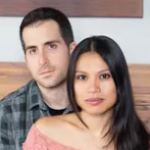
Kristelle and Evan Shulman
Parents navigating mitochondrial disease and reproductive decision-making
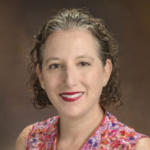
Marni Falk, MD
Attending physician and Executive Director of the Mitochondrial Medicine Frontier Program
Children’s Hospital of Philadelphia
Professor in the Division of Human Genetics, Department of Pediatrics
University of Pennsylvania Perelman School of Medicine
Episode Transcript
Kristelle Shulman
My name is Kristelle Shulman. I am a nurse practitioner for about almost 20 years,
Evan Shulman
and I’m Evan Shulman, and I’ve been a PA, or physician assistant, for 20 years.
Kristelle Shulman
That’s actually how we met. In the hospital.
Evan Shulman
Yep, that was it. She said hello to me in the elevator, and we had both looked at each other, I guess, for a while, but at the time Kristelle was working in the recovery area, and I never had an excuse to talk to her, and the elevator was, was it one day.
Lauren Arora Hutchinson
In many ways, Evan and Kristelle are an ordinary couple, two working people with busy lives. They’re now married. They live in New York City. They love to exercise. And shortly after getting married in 2015, they did what many couples do. They decided to start a family.
Kristelle Shulman
We had a normal pregnancy, as well as delivery. Noah was born on December 29th, 2016 It was the best feeling in the world. Inexplicable, I would say.
Evan Shulman
He was born relatively healthy, initially had some low glucose levels. He was checked multiple times by the pediatric team, by the NICU. They assured us everything was fine, and he was right from the beginning pretty difficult to feed.
Lauren Arora Hutchinson
Noah struggled to breastfeed. While this was troubling to Evan and Kristelle, the hospital staff reassured them there was nothing to worry about.
Evan Shulman
In the hospital, we were assured that he’s, you know, newborn, and he’ll get it. He just needs time to get it. By the time we were discharged home, Kristelle had actually met with a lactation consultant, in addition to the pediatric team, the NICU team. Everybody met with us and reassured that everything’s normal, so we went home…
Lauren Arora Hutchinson
Unfortunately, the feeding troubles continued.
Evan Shulman
And this went on. This went on for almost 10-11 days, and every night was difficult, because we’d wake up to feed him. Feeds were taking half hour, 45 minutes, an hour, sometimes. Sometimes an hour and a half, just to get him to take down 15 or 20 mls of milk. So he was, he was expending so much energy to feed that he was falling asleep during the feed, and we said something is clearly wrong. Like this is… this cannot be normal. We addressed these concerns with our pediatrician in the office. At one point, he kind of played it off as, oh, you’re both medical professionals and probably a little hyper sensitive, and don’t worry, just go home, he’s going to feed. So, anyway, we said something is definitely not right, and we called the pediatrician’s office, and the pediatrician, who we usually see was not in, and we saw a much more junior pediatrician in the office who spent, I would say, a good 30 minutes with Noah, held him, tried to feed him, didn’t just listen to our story and send us out. He devoted a significant amount of time, and then told us he was concerned, said he wasn’t quite sure what he’s concerned about, and he said, “Go home if he’s not feeding in the next hour or two, then you need to take him to the pediatric ER.” We went home, got a bag, and then went straight to the ER, and that was really when everything started to unfold. Um, sorry.
Lauren Arora Hutchinson
What happened next would change their lives and turn them into accidental pioneers of genetic medicine. Over the next two episodes, we’re bringing you the story of Evan and Kristelle. We’ll retrace the steps of their heartbreaking journey, and hear how they navigated a series of scientific and ethical quandaries with no obvious answers. Along the way, their story takes unexpected turns and ventures into new scientific territory, more than we could cover in a single episode. Perhaps unsurprisingly, their story deals with some difficult themes and challenging moments. Please take care while listening. I’m Lauren Arora Hutchinson, director of the iDeas Lab at the Johns Hopkins Berman Institute of Bioethics, and this is playing god?
Evan Shulman
So, when we got there, he was pretty lethargic, and immediately they said that they were concerned and started doing a full panel of labs on him. We waited out through the night, we just stayed by his side, and then I think the next day was when the metabolic team came and saw him and they started to mention, for the first time, concern for mitochondrial disease.
Lauren Arora Hutchinson
Mitochondria are like many little power plants in each of our cells. Throughout our body, they take nutrients and convert them into energy that cells use to multiply, divide, and regulate. The doctors worried that something might be wrong with these tiny power plants, that Noah could have been born with a small error in the DNA of his mitochondria, that this mutation could be the cause of Noah’s problems, and that if it was, the prognosis could be dire. Receiving this news, they decided to transfer Noah to Mount Sinai in Manhattan, a hospital better equipped to help him.
Evan Shulman
We got there probably around midnight. I mean, it was like… we had the biggest greeting by this huge team, like Noah was really swarmed by people, and we stayed with him there through the night, and they said it looks like for sure this is going to be a mitochondrial disease, and we need to wait for genetic testing.
Lauren Arora Hutchinson
You might remember from biology class that most of your DNA is held in the nucleus of each cell. That’s the genetic code that shapes our bodies and many of our traits, but all of your mitochondria also carry their own separate bits of DNA. That mitochondrial DNA isn’t the same as the rest of our DNA. It doesn’t determine or shape most of who we are, but it is essential for how our cells produce energy. And so when there’s a mutation in mitochondrial DNA, it can cause mitochondrial disease. That’s what the doctors at Mount Sinai were testing. Noah stayed in the hospital for days, then weeks, as his parents waited for the results.
Evan Shulman
He had a lot of difficulties, he had seizures, he ended up getting intubated, he had respiratory distress.
Kristelle Shulman
Evan and I would sit right by his room, just alone, and like, how did we get here? What happened?
Kristelle Shulman
You know, we’d come back to his room and just make sure that we, you know, wipe our tears and make sure that we, that he hears us, and he and I, and when we know that he knows we’re there, it’s just like that room was surrounded by his like essence, you know.
Evan Shulman
It took about 30 days from the date of admission to get back the mitochondrial panel, and the team sat down with us and told us that Noah has mitochondrial disease confirmed, and that he has 100% mutation load, which also known as homoplasmy, meaning all his cells are affected by it.
Lauren Arora Hutchinson
Not everyone with mitochondrial disease is affected in the same way. The human body is made up of trillions of cells, and every cell contains hundreds, sometimes thousands of mitochondria, each with its own genetic code. Some people have a mix of healthy and mutated mitochondrial DNA. That’s called heteroplasmy, but Noah’s test showed homoplasmy. 100% of his mitochondria carried the mutation. Doctors refer to this percentage as mutation load, and Noah’s was the highest it could possibly be.
Kristelle Shulman
You know, sitting in that family room, and just, you know, we were surrounded by fellows and doctors and attendings, just the two of us sitting like this, and you know, holding each other’s hands.
Lauren Arora Hutchinson
People meet devastating news in different ways. Some turn inward. Some lean on family. Some focus on simply getting through each hour. For Kristelle and Evan, even in the midst of their shock, there was a sense of purpose, an instinct to do everything they could for Noah.
Evan Shulman
So, while Noah was sick in the hospital, Kristelle and I sort of took on different roles. She was obviously Noah’s mom and was there for, you know, the best compassion that she could ever give her son, and my role was figuring out how are we gonna make sure that Noah’s getting the best care possible at the same time. So, I did a PubMed search, which searches all medical journals, and I searched for the specific mutation that Noah has, and I emailed every author on every paper that I could get a hold of… had a tremendous response, almost everybody wrote back to me whether they had any information to provide or not. And in particular, Newcastle University in England wrote back, and it turns out Newcastle had a family with the exact same mutation that they’ve been following. They, they asked us what they were doing for Noah. We told them, and sadly the only treatment was supportive care, and they assured us that, you know, what was being done is the best that can be done.
Lauren Arora Hutchinson
For Evan and Kristelle, it was confirmation that Noah’s life couldn’t be saved, only made more comfortable.
Kristelle Shulman
Having our son just, you know, laying in that incubator, sorry, like really just holding on to his dear life, you know, and I wasn’t ready to let him go. You know, we weren’t ready to let him go.
Evan Shulman
Noah spent more than two months in the NICU, like that became his home, and we were very fortunate. The team taking care of him, and the nurses, they were his family, the things that they saw him go through, and we saw him go through. I mean, how do you, how do you, why would this happen to a baby? There’s really no explanation.
Kristelle Shulman
He had like these two episodes of like cardiac arrest, and like the first one I like yelled out from outside, and I said, I’m not ready to let you go yet. Don’t go, and he didn’t go, and then I think that the last time, the last one, we were actually able to say goodbye, like I felt like I was able to say I need you to rest now. I don’t want you to suffer anymore. No one, babies, any humans, any one should ever go through this.
Evan Shulman
Noah passed away at just shy of three months old.
Lauren Arora Hutchinson
It was a terrible end to a heartbreaking three month ordeal, but it was also the start of a much longer odyssey, because when Noah was tested and diagnosed with mitochondrial disease, the doctors also tested Kristelle, and the results there weren’t good news either.
Kristelle Shulman
I had about 75% of the dysfunction, the mitochondrial dysfunction, and so I had to also worry about my health as well.
Evan Shulman
And, sort of in the same breath, they said you guys cannot have healthy biologic children.
Lauren Arora Hutchinson
You see, while the nuclear DNA that shapes who we are is inherited from both parents…
Marni Falk
All of our mitochondria comes through our mother through the egg.
Lauren Arora Hutchinson
This is Dr. Marni Falk, a clinical geneticist and pediatrician. She runs the mitochondrial medicine frontier program at the Children’s Hospital of Philadelphia.
Marni Falk
When somebody’s a carrier of a mitochondrial DNA mutation, the question becomes: do all of her eggs have this? Will every child get this? If you had jelly beans in a jar, like some were red and some were green, and you put your hand in, how many red would you pull out? Well, it’s very hard to predict, right? And you’d probably pull out a different percentage each time, and that’s what happens with these mutations.
Evan Shulman
And…
Kristelle Shulman
Yeah, sorry, do you mind? It’s, you know, it was heartbreaking because we had a vision, you know, like of our family and of a big family. And so, you know, when we heard that, we thought that was like a death sentence. We were told that that was it, you know, we could either do adoption or egg donation, but… so that was a really tough thing to swallow. It was hard.
Lauren Arora Hutchinson
But they weren’t ready to give up on their dream of having biologically related children, and so the Shulmans wrote back to the people in Newcastle.
Evan Shulman
I emailed them back, and I said, what are what other options would we have in the future for other children when we first heard about mitochondrial replacement therapy, or MRT.
Lauren Arora Hutchinson
MRT is a fascinating science fiction sounding technology.
Marni Falk
Colloquially, people refer to it as a three parent baby, but the proper term is mitochondrial replacement technology.
Jeffrey Kahn
You’re combining genetic material from two women to make one egg, which is then fertilized by one sperm.
Lauren Arora Hutchinson
Jeffrey Kahn, our resident bioethicist and director of the Johns Hopkins Berman Institute of Bioethics. And he says a technology like this could work well in cases like the Shulmans, because of how our cells are structured and how mitochondrial DNA is passed from mothers to their children.
Jeffrey Kahn
Mitochondria are in the cytoplasm of a cell, so think of that as the white part of a chicken egg. If you don’t want that white part to be passed on, you need to figure out how to get the yolk part, where the nucleus is, where the DNA that makes us who we are resides out of the egg of a woman who we know carries mitochondrial DNA disease. So, think of it as plucking out the yellow and putting it into the white part of a chicken egg that has had its yellow part removed.
Marni Falk
And you basically do a swap. you take out the nucleus from the intended parents, and you put it into the cell that has healthy mitochondria from the donor.
Jeffrey Kahn
MRT seems to offer a way to eliminate the risk of mitochondrial DNA disease, and it certainly holds out the prospect of that in a way that other options at that time certainly did not.
Lauren Arora Hutchinson
The science behind MRT first began to take shape in the early 2000s. Over the next decade, researchers showed that these techniques could work, first in animals and then in human embryos, raising the possibility of preventing mitochondrial disease. But MRT would also raise profound ethical questions about altering the genetics of children who might be born this way.
Jeffrey Kahn
You’re changing the genetic makeup of the mitochondria in that individual. It’s a heritable genetic change.
Lauren Arora Hutchinson
Heritable, meaning the genetic changes created through MRT can be passed down to future generations. This creates an ethical conundrum. How should we think about the risks and consequences, not only for the baby born through this process, but that baby’s future children, or their children’s children? Around the world, policymakers began grappling with MRT. In the United Kingdom, the government launched a formal process, including public consultation, to consider whether, and how, to allow the procedure on a case by case basis. In the United States, federal agencies were also beginning to weigh the scientific and ethical questions raised by MRT. The U.S. Food and Drug Administration, or FDA, asked the U.S. National Academy of Medicine to convene an expert committee in 2015, chaired by our very own, Jeffrey Kahn.
Jeffrey Kahn
And so the first question we wrestled with is, Is it ethically acceptable to create that kind of heritable genetic change which would be passed on to future generations.
Lauren Arora Hutchinson
The expert committee spent a year reviewing the latest science and debating the ethics of such a novel reproductive technology. They heard testimony from scientists, physicians, and, importantly, affected families. In the end, they issued a report with recommendations to the FDA about how to move forward.
Jeffrey Kahn
In the case of mitochondria, that passage only happens through the maternal line from mothers to their offspring, and so if a daughter were created this way, then she would pass on that mitochondrial DNA change to her offspring, but if a male, a boy was born, he would not. So, if you don’t implant female embryos, there’s no way of passing on the heritable genetic change to future offspring. So, that was one way for us to avoid the concerns about heritable genetic change through generations has its own ethics concerns when you’re talking about sex selection, but we thought that was a reasonable trade off, certainly for the purpose of FDA review in a clinical trial.
Lauren Arora Hutchinson
But in the end, the agency’s hands were tied. The U.S. government took a different position.
Archive
If there is no further debate, the member from Alabama,
Lauren Arora Hutchinson
while Jeffrey Kahn and the other committee members were in the meeting room to deliver their recommendations to the FDA.
Archive
Thank you, Madam Chair. The bottom line is the science and the bioethics need to catch up with potential disasters that could occur.
Jeffrey Kahn
We were told that the budget bill, the last budget bill in the Obama administration included a rider restricting the FDA from receiving any applications for licensure of a technology that modified a human embryo genetically or led to any heritable genetic change.
Archive
Question is on the amendment offered by the member from Alabama, all those in favor say aye. Aye. Those opposed, say no. No. In the opinion of the chair, the ayes have it, and the amendment is adopted.
Jeffrey Kahn
And therefore, it would mean they would be prohibited from receiving license applications to do MRT.
Lauren Arora Hutchinson
Next time on playing god?
Evan Shulman
We have to figure out a way to do MRT.
Kristelle Shulman
I wanted to keep going. I wasn’t going to stop. I knew once I held him, I knew once I had him, like it’s just something that I don’t want to miss out on.
Lauren Arora Hutchinson
Many thanks to our guests in this episode. To Kristelle and Evan Shulman for sharing their story with us, and to Jeffrey Kahn and Marni Falk.
playing god? is a production of the Dracopoulos-Bloomberg iDeas Lab at the Johns Hopkins Berman Institute of Bioethics, made in association with Sea Salt and Mango Productions.
This episode was produced by Redzi Bernard, with help from Brian Ricker and Lyric Bowditch.
Our Executive Editor is Tony Phillips.
Music and sound design by Alexander Overington.
iDeas Lab Producer, Lyric Bowditch.
Researcher, Brian Ricker.
Story Editor, Simon Adler.
Show art by Barry Pousman and Shawn Carney.
Our Production Coordinators are Leah Lord and Susan Snead.
Our Executive Producers are Jeffrey Kahn and Anna Mastroianni.
I’m Lauren Arora Hutchinson, host and Managing Editor.
Come back next week for more playing god?
The Johns Hopkins University Sesquicentennial is proud to support this podcast. JHU celebrates 150 years of pioneering education and research—advancing knowledge to meet the challenges of every generation. Learn more at 150.jhu.edu.
Continue the Conversation
We want to hear your thoughts about this episode. Please share them using the form below and your comments could be posted on this page and made accessible to other listeners.